The role of methoxyflurane in procedural analgesia for surgical patients with open wounds

Abstract. Background. Procedural pain in a surgical inpatient setting remains a clinically significant problem, particularly during repeated painful wound care interventions such as negative pressure wound therapy dressing changes, wound debridement, and burn wound management. Achieving adequate analgesia is complicated by substantial interindividual variability in pain perception. This is due to genetic factors, anxiety, fear, and previous negative experiences.
An individualized approach with assessment of patient-specific needs and selection of the optimal analgesic method is essential and may improve both clinical outcomes and patient experience during procedures. One practical solution is the use of inhalational analgesia based on methoxyflurane. The purpose was to evaluate the efficacy and safety of inhaled methoxyflurane as an adjunct to standard analgesia during painful procedures in a surgical inpatient setting.
Materials and methods. A clinical evaluation was conducted involving 70 patients with open wounds. Outcomes were compared between two groups: participants receiving standard analgesia and those receiving additional methoxyflurane. In both groups, the following parameters were assessed: pain intensity, patient comfort, need to interrupt the procedure due to pain, requirement for sedation, and adverse events.
Results. The maximum pain intensity assessed by the visual analogue scale was significantly lower in the methoxyflurane group (М = 3.36 points) compared to the control one (М = 5.75 points), p < 0.001. Methoxyflurane as a component of multimodal analgesia provided stable pain relief throughout the procedure without an increase in the frequency of adverse events. In the methoxyflurane group, no patients (0.0 %) required interruption of the procedure due to pain or additional sedation. In the control group, due to pronounced discomfort, the procedure was interrupted in 4 patients (20.0 %), and 3 participants (15.0 %) required additional sedation.
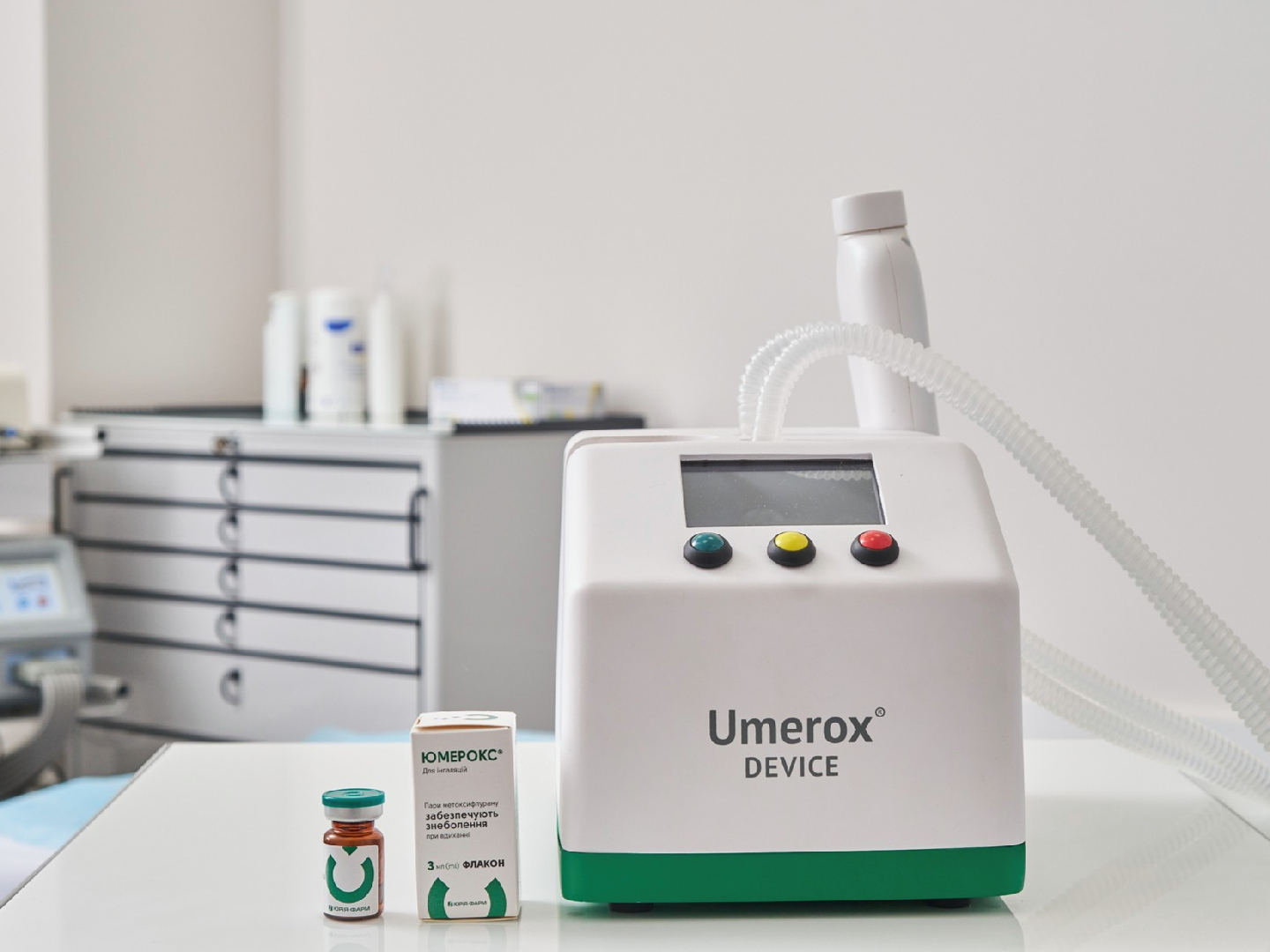
Conclusions. The study results support the potential for broad implementation of methoxyflurane (Umerox) in multimodal analgesia protocols in surgical practice in Ukraine.
Keywords: methoxyflurane; procedural pain; negative pressure wound therapy; multimodal analgesia; surgery; wounds; clinical assessment.
Authors:
- Maksym Pristupiuk, Department of Surgery 2, Bogomolets National Medical University, Kyiv, Ukraine.
- Ihor Kolosovych, Doctor of medical sciences, Professor, Head of the Department of Surgery with a course in abdominal surgery, Bogomolets National Medical University, Kyiv, Ukraine.
- Borys Bezrodnyi, Doctor of Medical Sciences, Professor, Department of Surgery with a course in abdominal surgery, Bogomolets National Medical University, Kyiv, Ukraine.
- Andrii Trushchelov, PhD student, Department of Surgery with a course in abdominal surgery, Bogomolets National Medical University, Kyiv, Ukraine.
- Yuliana Trembovetska, 6th year student, Department of Surgery with a course in abdominal surgery, Bogomelets National Medical University, Kyiv, Ukraine.