Effectiveness of local treatment of gunshot wounds
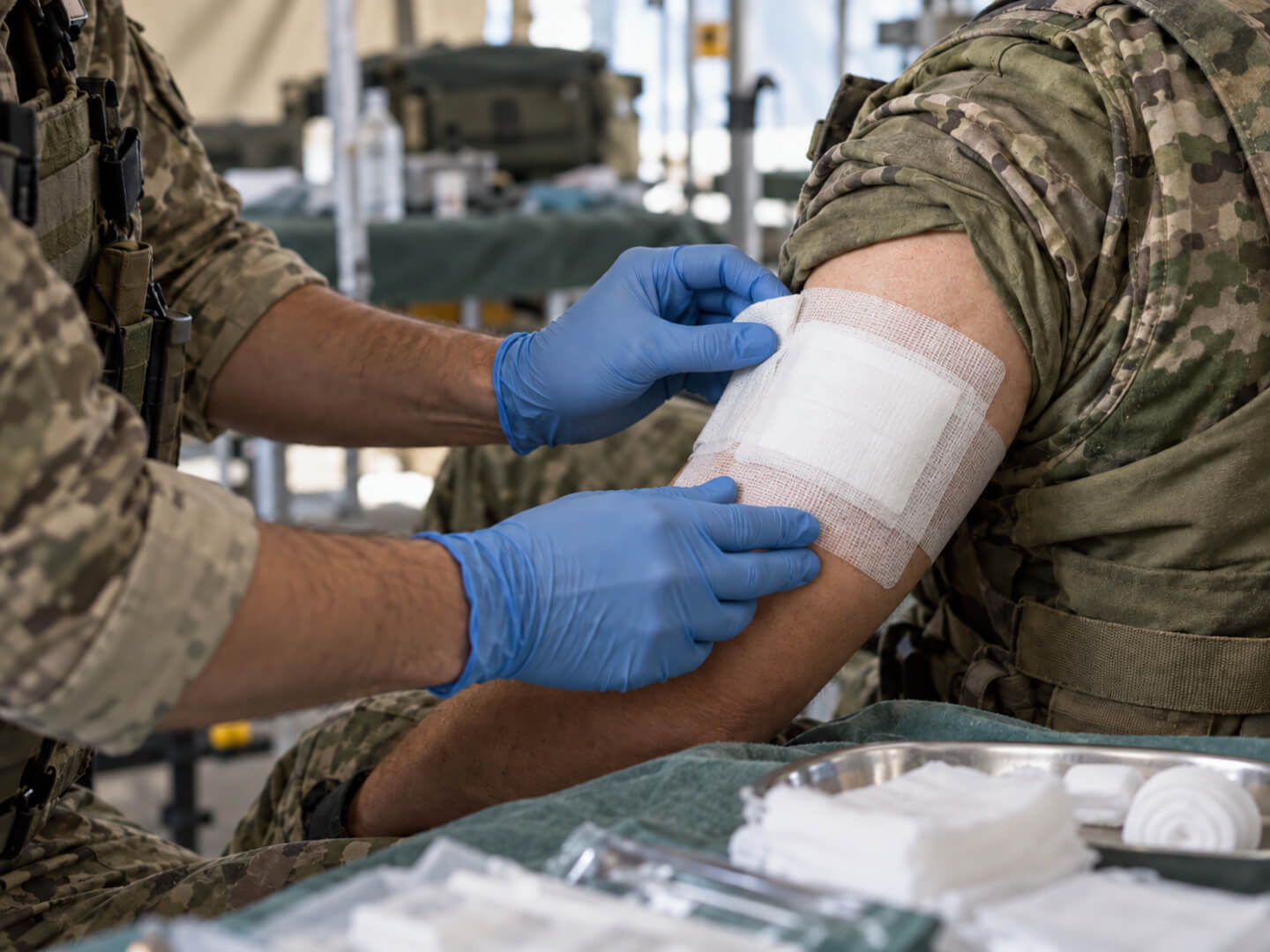
Resume. There quirement softoday need an adequateres ponse in the form of modern qualified medical assistance at various stages of the evacuation of the wounded. Prevention of infectious complications of modern gunshot wounds is a factor in the rapid healing of wounds.
The results of the study of the microflora of gunshot wounds of microorganisms with the determination of sensitivity to antibacterial drugs in the wounded who were treated at the VMCC of the Central Region are presented.
A comparative analysis of local treatment with a solution of decasan and a mixture of decasan and 3% hydrogen peroxide in a ratio of 3:1 was conducted. It was determined that the combination of antiseptics decasan and 3% hydrogen peroxide in a ratio of 3: 1 contribute to more rapid purification and healing and reduce wound healing by ana verage of 2.5 days.
Key words. Gunshot wounds, microflora, antibiotics, antiseptics.
Conclusions:
- In the etiological structure of pathogens isolated from massive wounds of victims of gunshot wounds, gram-negative microorganisms dominate (65%), the leaders among which are bacteria of the genus Acinetobacter (53%), Pseudomonas (15%).
- The isolated microorganisms are characterized by a high degree of resistance to most antibacterial drugs, which should be taken into account in treatment. Cefoperazone/sulbactam is effective against the isolated gram-negative microorganisms. In conditions of multiresistance of the isolated isolates of acinetobacteria, it is important to establish the sensitivity of these microorganisms to polymyxin-B, colistin. Antibiotics doxycycline and rifampicin can be used as reserve drugs.
- Analysis of the effectiveness of treatment results proved faster cleansing and healing of wounds after using a mixture of decasan in combination with 3% hydrogen peroxide in a ratio of 3:1, respectively, which led to a reduction in the treatment time of the wounded by an average of 3–4 days and, thus, led to a reduction in the duration of antibacterial therapy from 10 to 7 days.
Literature:
- Саламанов А. Г. Антибіотикорезистентність в хірургії / А. Г. Саламанов // Внутрішньолікарняні інфекції та методи визначення механізмів резистентності їх збудників до антимікробних препаратів: матеріали Всеукр. наук.-практ. конф. з міжн. участю. Київ, 2012. С. 12–15.
- Якобчук С. О. Сучасні питання використання антибіотиків при інфекції шкіри та м’яких тканин у хірургії / С. О. Якобчук // Клінічна анатомія та оперативна хірургія. 2014. Т. 13, № 2. С. 99–102.
- Використання сучасних методів спеціалізованого травматологічного лікування поранених з вогнепальними переломами довгих кісток (ІУ рівень надання медичної допомоги) / С. О. Король, А. А. Беспаленко // Літопис травматології та ортопедії. 2015. № 1–2 (31–32). С. 28–30.
- Лакша А. М. Лікування постраждалих з вогнепальними пораненнями м’яких тканин кінцівок / А. М. Лакша, Д. В. Лось // Літопис травматології та ортопедії. 2015. № 1–2 (31–32). С. 31.
- Лакша А. М. Оптимізація лікування поранених з вогнепальними ушкодженнями кінцівок / А. М. Лакша // Наука і практика. Міжвідомчий медичний журнал. 2015. № 1–2 (5–6). С. 35.
- Аль-Нозейли ХаледАли Микрофлора огнестрельных ран: влияние на исход лечения / Аль-Нозейли Халед Али, Г. Ш. Голубев, В. Г. Голубев // Гений Ортопедии. 2010. № 2. С. 60.